

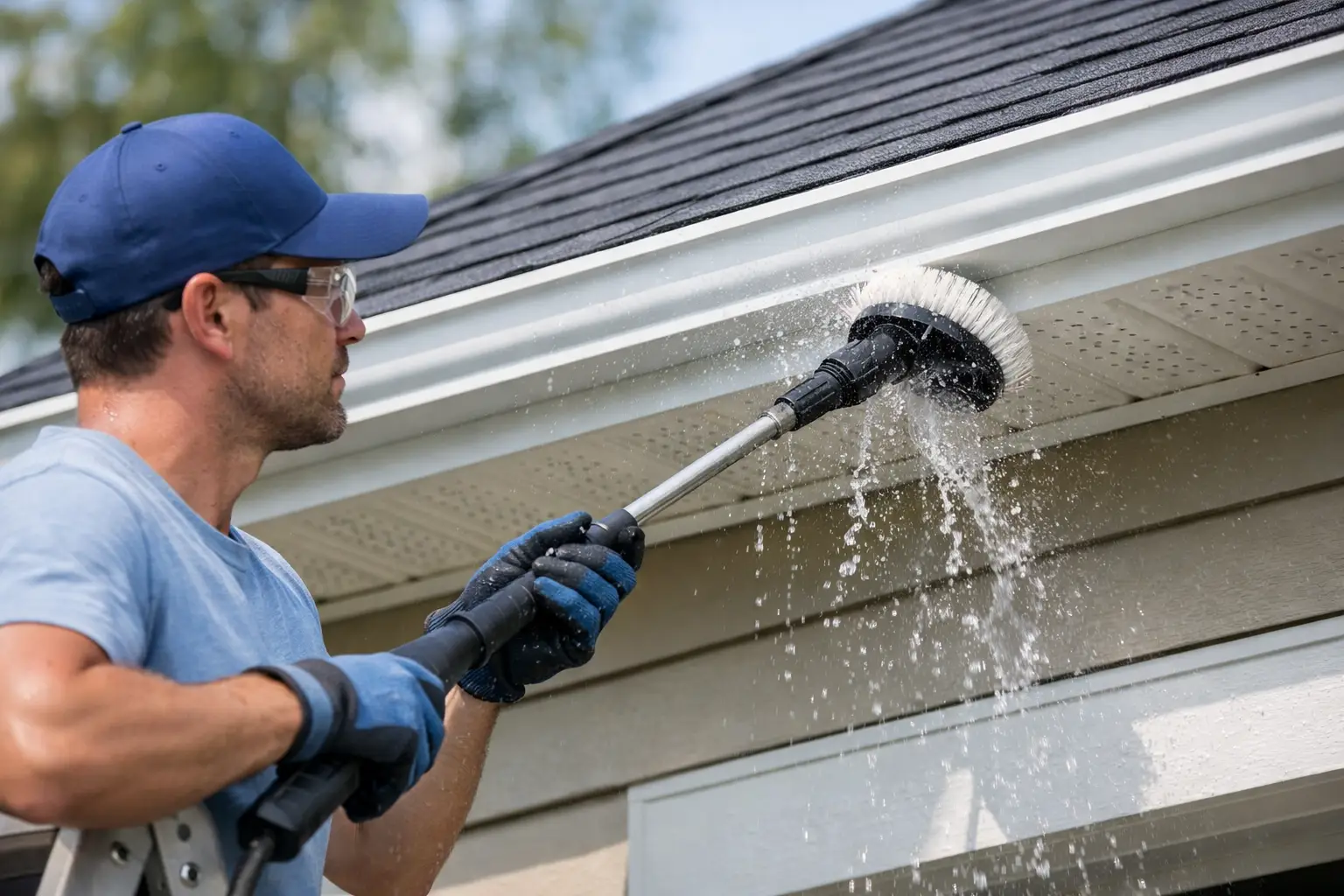
Fascias and soffits sit just below the roofline, so it is easy to miss the gradual build-up of traffic film, algae, cobwebs and green staining. But when they become dull or streaked, they can make otherwise clean windows and brickwork look neglected. Knowing how to clean fascia and soffits properly helps protect your property’s kerb appeal without risking damage to the roofline, paintwork or yourself.
For many homes, a careful clean can make a noticeable difference in an afternoon. The key is using the right method for the material, keeping pressure low and being realistic about working at height.
What are fascias and soffits?
The fascia is the long board fixed along the edge of the roof, usually behind the guttering. It supports the gutter and closes off the end of the roof rafters. The soffit is the board underneath it, bridging the gap between the outside wall and fascia board.
Modern properties often have uPVC fascias and soffits. Older homes may have painted timber, while some have aluminium or cement-based boards. Each needs a slightly different approach. uPVC generally responds well to a gentle wash, whereas painted wood needs more care to avoid lifting flaky paint or forcing water into gaps.
Cleaning this area is not only about appearance. A clear view of the roofline can reveal peeling paint, loose gutter brackets, overflowing gutters, cracked sealant and damaged vents before they become more expensive repairs.
How to clean fascia and soffits step by step
Choose a dry, mild day if possible. Strong sunshine can dry cleaning solution before you rinse it away, leaving marks, while rain makes ladders and surrounding surfaces slippery. Move garden furniture, pots and vehicles away from the area, and cover delicate plants if you are using a stronger exterior cleaner.
Start with a close inspection
Before applying any cleaning product, look for obvious defects. Check whether guttering is overflowing, sagging or packed with vegetation. Watch for loose boards, rotten timber, exposed cables, wasp nests and cracked sections of uPVC.
If the fascia is badly stained beneath the gutter line, the gutters may be leaking or blocked. Cleaning the board without dealing with the cause will only give you a short-lived result. Where gutter clearance is needed, it usually makes sense to have this completed before the roofline wash.
Brush away loose debris first
Use a soft-bristled brush or microfibre duster on an extension pole to remove cobwebs, dry leaves and loose dirt. This simple first pass stops you rubbing gritty debris across the surface when washing.
Avoid abrasive scouring pads, wire brushes and harsh powders. These can scratch uPVC and leave a rougher finish that attracts dirt more quickly. They are particularly risky on ageing painted timber, where a light clean can quickly turn into a repainting job.
Wash with a mild cleaning solution
For everyday grime on uPVC, warm water with a small amount of washing-up liquid is often enough. Apply it with a soft brush, sponge or microfibre wash pad on an extension pole. Work in manageable sections, starting at one end and keeping an eye on drips running down walls, windows and doors.
For algae, mildew or stubborn green staining, use a suitable exterior cleaner that is labelled for the surface you are treating. Follow the manufacturer’s dilution and dwell-time instructions rather than making the mixture stronger. More chemical is not always better, especially near painted surfaces, garden plants and drainage.
Let the solution do the work, then gently agitate the stained areas. It may take a second application where the roofline has not been cleaned for several years.
Rinse carefully and check the finish
Rinse with clean water, ideally using a hose on a gentle setting or a pure-water brush system. The aim is to remove the cleaning residue without blasting water behind fascia boards, under tiles or into soffit vents.
Stand back once the surface has dried. Faint marks sometimes disappear as the uPVC dries, while remaining dark streaks may indicate staining from overflowing gutters rather than ordinary surface dirt. Clean the outside of the guttering at the same time if you can do so safely, as bright fascias beside dirty gutters can still look unfinished.
Should you use a pressure washer on fascias and soffits?
A pressure washer can be useful on patios and driveways, but it is rarely the best first choice for roofline cleaning. High pressure can force water into joints, disturb sealant, strip paint from timber and drive dirt onto windows, walls and conservatory roofs. Used at the wrong angle, it may also loosen older guttering or damage fragile soffit vents.
Some professionals use controlled, low-pressure equipment for suitable surfaces, but that is different from directing a powerful domestic pressure washer upwards from a ladder. For most homeowners, a soft brush, appropriate cleaner and low-pressure rinse offer a safer, more controlled result.
If you have painted wooden boards, use minimal water and do not scrub aggressively. Flaking paint, soft timber or visible rot should be assessed before cleaning. A wash may improve the appearance temporarily, but it will not solve deterioration underneath.
Working at height: where the risk changes
The hardest part of fascia and soffit cleaning is not the cleaning product. It is access. A short, stable reach from ground level using an extension pole is one thing; leaning from a ladder to reach around a bay window, conservatory or sloping driveway is another.
Do not rest a ladder against guttering, climb onto a conservatory roof or overreach to reach the final section. Wet surfaces, uneven paving and awkward angles make roofline work one of those jobs that can become unsafe very quickly.
It is sensible to call in a professional when the property is two storeys or more, access is restricted, the roofline sits above a conservatory, or there are signs of gutter defects. An insured cleaning contractor has the access equipment, methods and experience to clean the area thoroughly while reducing the risk to people and property.
How often should fascias and soffits be cleaned?
For most homes in Staffordshire and the Midlands, a clean every 12 to 24 months is a practical starting point. Properties beneath trees, near busy roads or in damp, shaded locations may need attention more often because algae and airborne grime build up faster.
A regular exterior cleaning schedule can prevent the heavy staining that takes longer to remove. Many property owners arrange fascia and soffit cleaning alongside window cleaning, gutter clearing or conservatory cleaning so the whole exterior looks consistently cared for rather than cleaned in isolated patches.
Commercial premises can benefit from more frequent checks, particularly where customer-facing entrances, signage and glazing are directly below the roofline. A clean, well-maintained frontage sends a better message than stained boards and overflowing gutters.
Common mistakes that leave poor results
One common mistake is cleaning only the visible front face of the fascia while leaving gutter fronts, soffit edges and nearby window frames untouched. The contrast can be surprisingly noticeable once everything dries.
Another is using bleach or strong chemicals without checking their suitability. These products can affect paint, discolour adjacent materials and harm plants if they run off into beds. Always use a product intended for exterior surfaces and rinse surrounding areas carefully.
Finally, do not assume every mark is dirt. Brown staining can come from rusting gutter brackets or metal fixings. Black marks may be caused by persistent overflow, and yellowing on old white uPVC can be weather-related ageing. Cleaning can improve these issues, but it cannot always restore damaged or discoloured material to a brand-new finish.
When to book professional fascia and soffit cleaning
A professional clean is a worthwhile option if the roofline is heavily stained, difficult to reach or part of a wider exterior refresh. It is also useful when you want the job completed alongside gutter clearing, window cleaning, solar-panel cleaning or a conservatory clean, without arranging several separate contractors.
Fluro Clean provides insured exterior property cleaning for homes and businesses across Tamworth and surrounding areas, with clear communication and photo-based quotations available for straightforward planning. Sending a few photographs of the roofline, access points and any staining helps identify the safest and most effective method before a visit is booked.
A clean roofline does more than brighten the edge of your home. It makes it easier to spot small maintenance issues early, keeps the exterior looking cared for and removes one more demanding job from your weekend.


