

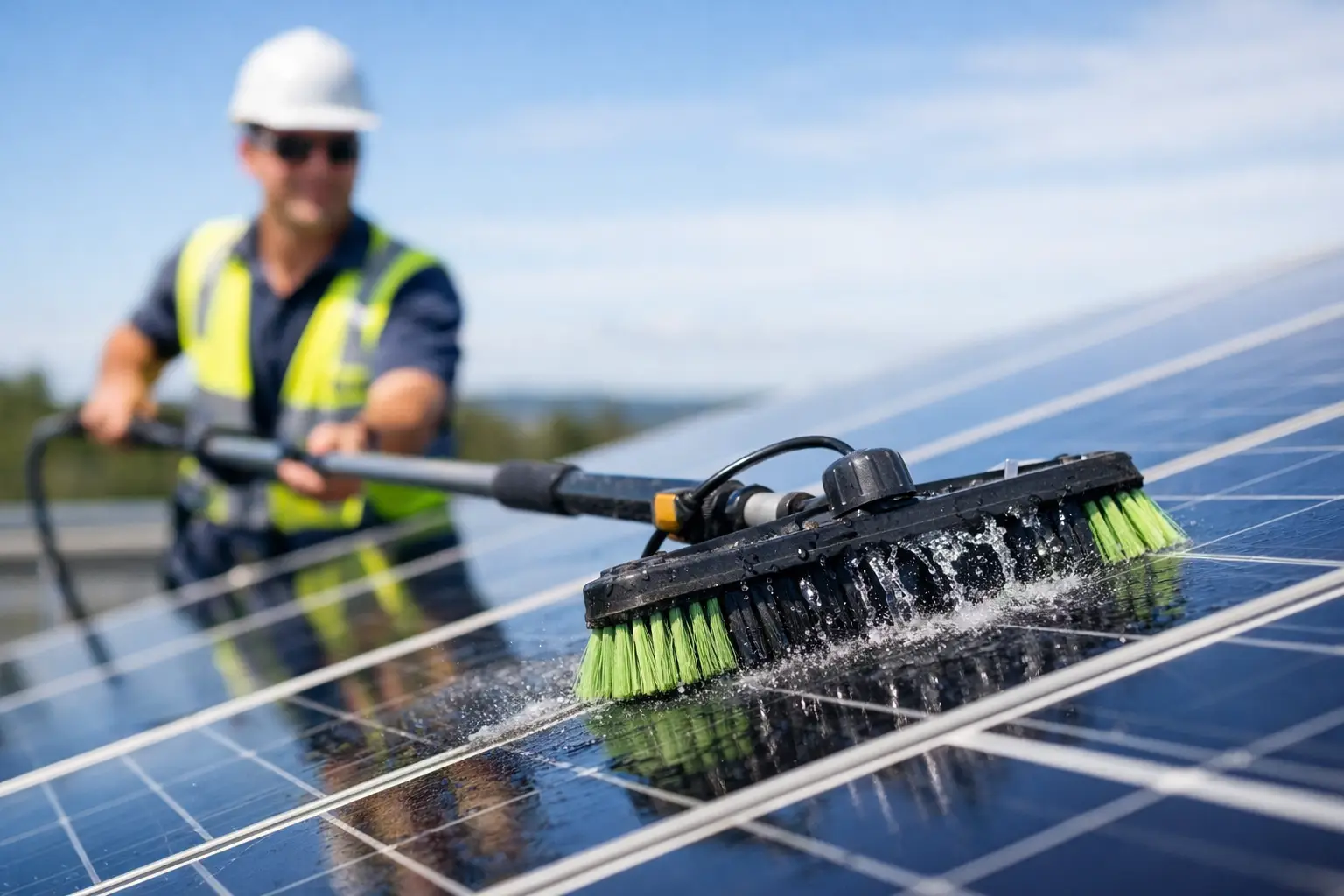
A light layer of dust can be easy to miss from ground level, but it may be sitting directly between your solar panels and the sunlight they need to generate electricity. So, how often should solar panels be cleaned? For most homes in Staffordshire and the Midlands, a professional clean once a year is a sensible starting point. However, properties near busy roads, farmland, trees, construction work or industrial areas may benefit from cleaning every six months.
There is no one timetable that suits every roof. The right interval depends on what lands on the panels, how much rain reaches them and whether shading or grime is beginning to affect performance. A planned check helps you avoid letting a small build-up turn into a larger maintenance issue.
How often should solar panels be cleaned in the UK?
For a typical residential installation, annual solar-panel cleaning is usually enough to remove accumulated dust, traffic film, pollen, bird droppings and organic debris. Booking the work in spring can be particularly useful, as panels are cleared after winter and ready for the brighter months when they have the greatest opportunity to produce power.
Twice-yearly cleaning is often worthwhile where panels are exposed to more contamination. This may apply if your property is close to a main road, beneath overhanging trees, near agricultural land or in an area with regular building work. Bird activity can also make a difference, especially where droppings repeatedly collect on the same part of the array.
Commercial premises, rental properties and larger solar installations may need a more regular schedule. A consistent maintenance plan makes it easier for owners and property managers to keep an eye on presentation, output and access issues without arranging a separate one-off visit each time.
The aim is not to clean panels unnecessarily. It is to remove the dirt that rain alone cannot shift before it has the chance to reduce the light reaching the cells.
Does rain clean solar panels properly?
Rain can rinse away loose dust, but it does not provide a full clean. In fact, light rain can sometimes leave behind dried mineral marks or move dirt into streaks around the frame edges. Stubborn bird droppings, pollen, algae and traffic residue tend to cling on rather than wash away.
This is particularly relevant after dry spells. A panel can look reasonably clean from below while still carrying a thin, uneven film across its surface. Because solar panels are designed to work efficiently with clear access to daylight, even patchy soiling can affect the performance of individual cells.
There is also a practical point: rainwater does not reach every area equally. Low roof pitches, sheltered sections of the roof and panels partly shaded by nearby trees may remain dirtier for longer. A visual inspection from a safe position, together with a look at your generation figures, gives a better indication than relying on the weather.
Signs your panels may need cleaning sooner
You do not need to climb onto the roof to decide whether a clean is due. In many cases, there are clear signs from ground level or in your solar monitoring app.
A noticeable drop in output compared with a similar period last year can be worth investigating, once weather conditions and seasonal daylight have been considered. Visible bird mess, leaf debris along the lower edges, pollen staining and dark patches are also good reasons to arrange a clean.
Pay attention after local events too. Nearby demolition, road resurfacing, harvesting activity and long dry periods can all leave a heavier-than-normal layer of dust. If your panels sit below a tree that sheds blossom, seeds, leaves or sap, the normal annual interval may not be enough.
It is worth separating cleaning from other possible causes of reduced generation. Shade from growing trees, a fault with the inverter, damaged components or a change in household monitoring settings may also affect the figures. Cleaning is a sensible first maintenance step when dirt is visible, but it should not be used to mask an electrical issue.
What affects the right cleaning schedule?
Location is usually the biggest factor. A rural home surrounded by open space may collect pollen and agricultural dust, while a town-centre property may receive more traffic film and airborne pollutants. Homes near Tamworth, Lichfield, Cannock, Sutton Coldfield, Walsall, Atherstone and Market Bosworth can all have different conditions depending on the immediate surroundings.
The angle of the panels matters too. Steeper panels tend to shed loose debris more easily, while lower-pitched installations can hold dust and leaves for longer. The direction they face, their position beneath chimneys or trees, and the amount of shelter provided by neighbouring buildings can all change how quickly they become soiled.
Birds are another common factor. A small amount of bird mess is not just cosmetic. It can be stubborn, create uneven shading and be difficult to remove safely without the right equipment. Regular cleaning also gives an opportunity to spot nests, loose debris or guttering issues nearby that may need separate attention.
Why professional solar-panel cleaning is the safer option
Solar panels are durable, but their glass surface, seals and mounting system should be treated with care. Walking on panels, using abrasive pads, harsh chemicals or high-pressure equipment can cause damage. Cleaning from a ladder can also create obvious risks, particularly on a wet roof or where access is awkward.
Professional cleaning uses appropriate soft-brush and pure-water methods to lift dirt without leaving detergent residue or smears behind. Pure water is filtered to remove minerals, helping the panels dry to a clear, streak-free finish. The process is designed to clean the surface thoroughly without scratching it or forcing water where it should not go.
For homeowners, the benefit is straightforward: no balancing on ladders, no guesswork over which products are safe and no need to buy specialist equipment for a job that may only be needed once or twice a year. For landlords and commercial property managers, professional work also provides a more reliable, planned approach to exterior upkeep.
When should you book a clean?
Spring is a popular time to clean solar panels because it removes winter grime before the longer, brighter days arrive. Autumn can work well for properties affected by leaves, tree debris and late-season bird activity. If your panels are in a high-soiling location, arranging both can provide a practical six-month routine.
That said, there is no need to wait for a particular month if panels are visibly dirty or you have noticed a change in generation. Cleaning after a prolonged dry spell, construction work nearby or a period of heavy pollen can be more useful than sticking rigidly to the calendar.
Where exterior maintenance is already being arranged, it can be convenient to coordinate the visit with window, conservatory, gutter or roofline cleaning. This keeps property care simple and means less time spent arranging different contractors for jobs that are often needed at the same time.
A simple maintenance routine for better results
A good approach is to check the panels visually every few months from the ground and compare generation figures against previous periods where possible. Note whether there are nearby trees growing into the light path, recurring bird activity or debris collecting around the roof.
For most properties, book a professional clean annually and adjust to every six months if the site is exposed to heavier dirt. Keep any monitoring alerts, installer paperwork and maintenance records together, particularly if the property is rented out or managed on behalf of others.
Fluro Clean provides insured, professional solar-panel cleaning across Tamworth, Staffordshire and surrounding Midlands areas, using safe methods that help leave panels clear without the risks of DIY roof access. A photograph of the installation and its access points is often enough to start a straightforward, no-obligation quotation.
Clean panels are not about chasing a perfect-looking roof every week. They are about giving a valuable part of your property the regular care it needs, so it can make the most of every clear day.


