

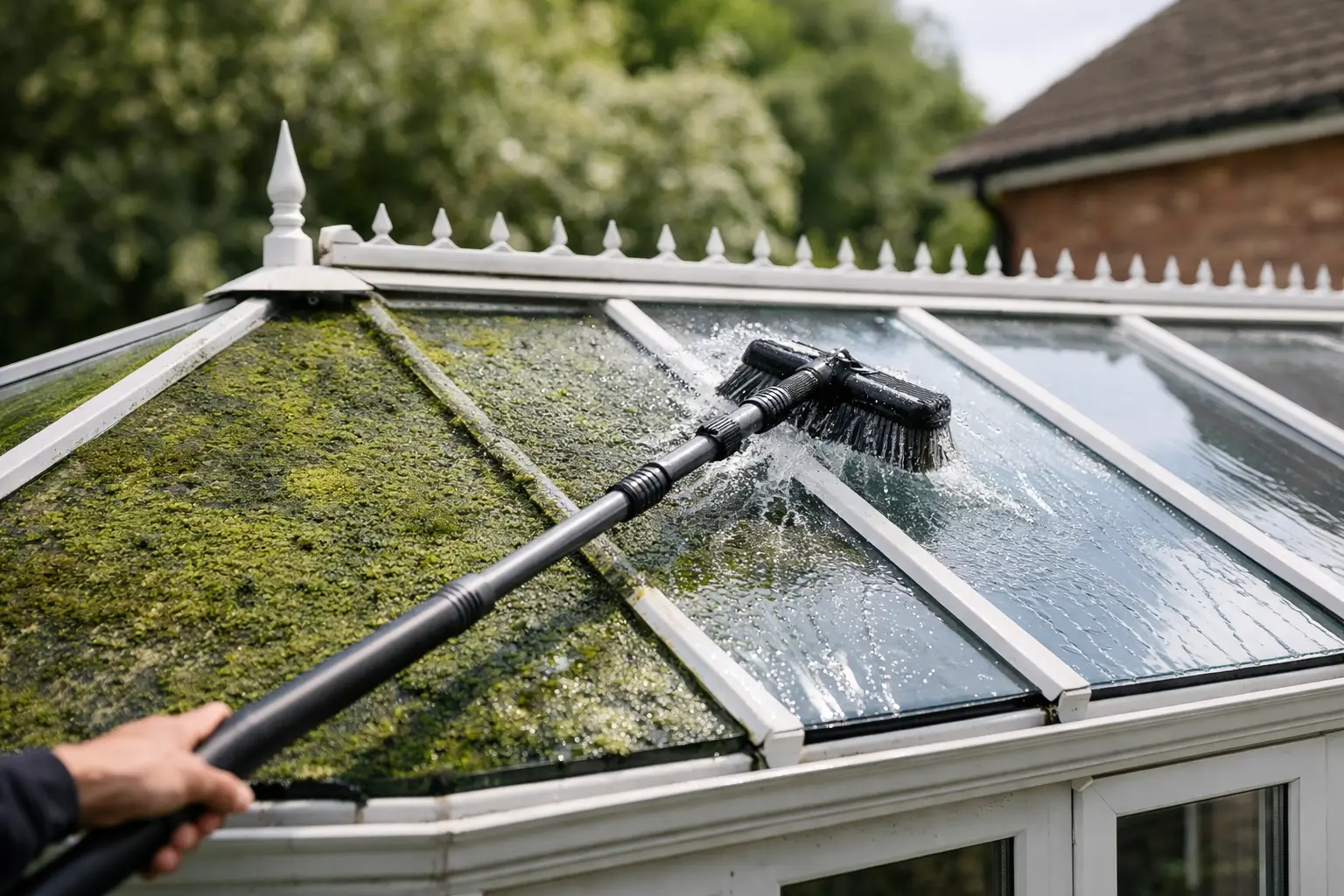
Green staining on a conservatory roof rarely stays a small cosmetic issue for long. Conservatory roof algae removal restores the brighter appearance of the room below, but it can also help prevent blocked gutters, persistent damp debris and unnecessary wear around roof seals.
For many homeowners, the first sign is a green haze spreading along the lower edge of the panels. Others notice dark streaks, a duller view of the sky or green deposits collecting in the guttering. It is tempting to tackle it with a ladder, a strong detergent and a pressure washer. That is also how clear panels, delicate seals and roofline finishes can be damaged.
The right approach depends on the type of roof, how established the growth is and whether the gutters are already holding moss and silt. A careful clean is about more than making the roof look better on the day. It is about removing the cause of the staining without creating a more expensive problem.
Why algae builds up on conservatory roofs
Algae thrives where moisture, shade and airborne dirt meet. Conservatories beneath trees, close to hedges or on the north-facing side of a property often develop growth more quickly. Rainwater carries dust, pollen and organic matter onto the roof, while leaves and moss collect around the gutter line. Once that material stays damp, algae has somewhere to establish itself.
Older roofs can be more affected because their surface may have fine scratches or a worn protective coating. Those imperfections hold dirt more readily than a smooth, well-maintained panel. Polycarbonate roofs are particularly prone to looking tired when grime becomes trapped in the surface texture, while glass roofs can show green film and water spotting very clearly.
Not every green mark is algae. Moss, lichen and general traffic film can look similar from ground level, and each may need a slightly different treatment. That is one reason a quick look from a ladder is not always enough to decide how the job should be carried out.
What can go wrong with DIY algae removal
The biggest risk is working at height on a roof that was not designed to be walked on. Conservatory panels, bars and frames do not provide a safe working platform. Leaning a ladder directly against the roof or putting weight on a panel can lead to cracking, leaks or personal injury.
A pressure washer can cause just as much trouble. High pressure may force water beneath seals, loosen cappings, damage polycarbonate surfaces or drive debris further into guttering. It can leave visible marks on certain panels too. A roof that looks clean initially may then attract dirt more quickly because its finish has been scratched.
Household bleach, harsh traffic-film removers and abrasive pads are also poor choices. They may discolour frames, affect seals and harm nearby plants when rinsed away. Strong chemicals can be especially difficult to control where runoff enters a garden or drainage channel.
There is a place for gentle home maintenance if the roof can be reached safely from the ground using suitable equipment. Light surface dirt on accessible lower sections may respond to clean water, a soft brush and a conservatory-safe cleaner used exactly as directed. If growth is established, the panels are high, or gutters are full, professional help is the safer and more effective option.
A safer method for conservatory roof algae removal
A professional clean starts with an assessment rather than a one-size-fits-all treatment. The roof material, panel condition, access, gutter line and level of biological growth all affect the method. Clear communication at this stage matters – photographs sent by WhatsApp, Facebook Messenger or email can often help establish what is needed before an appointment is booked.
1. Clear the surrounding debris
Leaves, moss, twigs and compacted sludge around the roof edge need attention first. If they remain in place, the roof may look better but will soon be exposed to the same damp conditions. Clearing gutters at the same time helps keep rainwater flowing properly and reduces the chance of dirty overflow staining the frames and walls.
2. Apply the right cleaning treatment
The treatment should be appropriate for the roof material and the level of algae. A suitable solution is allowed time to work on organic staining, rather than being blasted off with excessive force. This is particularly valuable on polycarbonate roofs, where a careful approach protects the surface and maintains its appearance.
The aim is to lift algae and grime while treating the roof gently. Heavy staining may require more than one pass, especially where it has built up for several seasons. A reliable contractor will be clear about what can be achieved in one visit and whether any weathering or permanent panel discolouration will remain.
3. Rinse with purified water for a clearer finish
Once the contaminants have been released, a controlled rinse removes residues from the roof, frames and glazing. Pure-water cleaning is a useful option because it dries without the mineral spotting associated with ordinary tap water. The result should be a cleaner, brighter roof with a streak-free finish rather than smears left behind by dirty rinse water.
4. Check seals, cappings and water flow
Cleaning offers a useful opportunity to spot obvious issues around roof bars, seals and gutter joints. It is not a substitute for repairs by a conservatory installer, but identifying a loose cap, damaged seal or overflowing gutter early can prevent an avoidable problem becoming worse. Customers should be told clearly if anything is noticed during the visit.
How often should a conservatory roof be cleaned?
There is no single timetable that suits every property. A conservatory in an open, sunny position may only need a thorough roof clean every 12 to 18 months, supported by routine window cleaning. A property beneath mature trees or beside dense planting may benefit from more frequent attention, particularly after autumn leaf fall.
The condition of the gutters is often the deciding factor. When gutters are clear, rainwater can wash away loose debris rather than holding it at the roof edge. When they are blocked, wet organic matter remains in contact with the roof and frames, creating the ideal conditions for algae to return.
For landlords and property managers, planned exterior maintenance is usually easier to budget for than waiting until a conservatory looks neglected or water starts overflowing. The same principle applies to business premises with glazed canopies or rooflights: clean glazing and free-flowing drainage contribute to a well-cared-for site.
Signs it is time to book a professional clean
A green film alone does not always mean urgent action is needed, but some signs should not be ignored. Book an assessment if staining is spreading quickly, rainwater is overflowing from the guttering, the room below has become noticeably darker, or debris has built up where the roof meets the house.
It is also sensible to call in a professional where access is awkward, the roof is high, panels are brittle with age or there are visible concerns around seals and roof bars. The cost of a careful clean is modest compared with replacing damaged panels or dealing with water ingress.
An insured local contractor should explain the proposed method, protect surrounding surfaces and leave the area tidy. Before-and-after photographs are helpful for larger jobs, particularly for landlords and commercial customers who need a clear record of the work completed.
Keep the clean result for longer
A few practical habits can slow the return of algae. Keep overhanging branches cut back where possible, remove leaves from accessible areas before they break down, and do not allow climbing plants to sit against the frames. Regular window and frame cleaning also stops dirt collecting around the roof edges.
Most importantly, do not wait until the roof is dark green and the gutters are overflowing. Early maintenance is gentler on the conservatory and usually produces a better finish. For homeowners across Tamworth, Staffordshire and the wider Midlands, Fluro Clean can make that upkeep straightforward with a careful, insured exterior clean planned around the condition of the property.
A clean conservatory roof changes more than the view from outside. It lets daylight back into the room, helps rainwater move as it should and gives you one less property job to worry about.


