

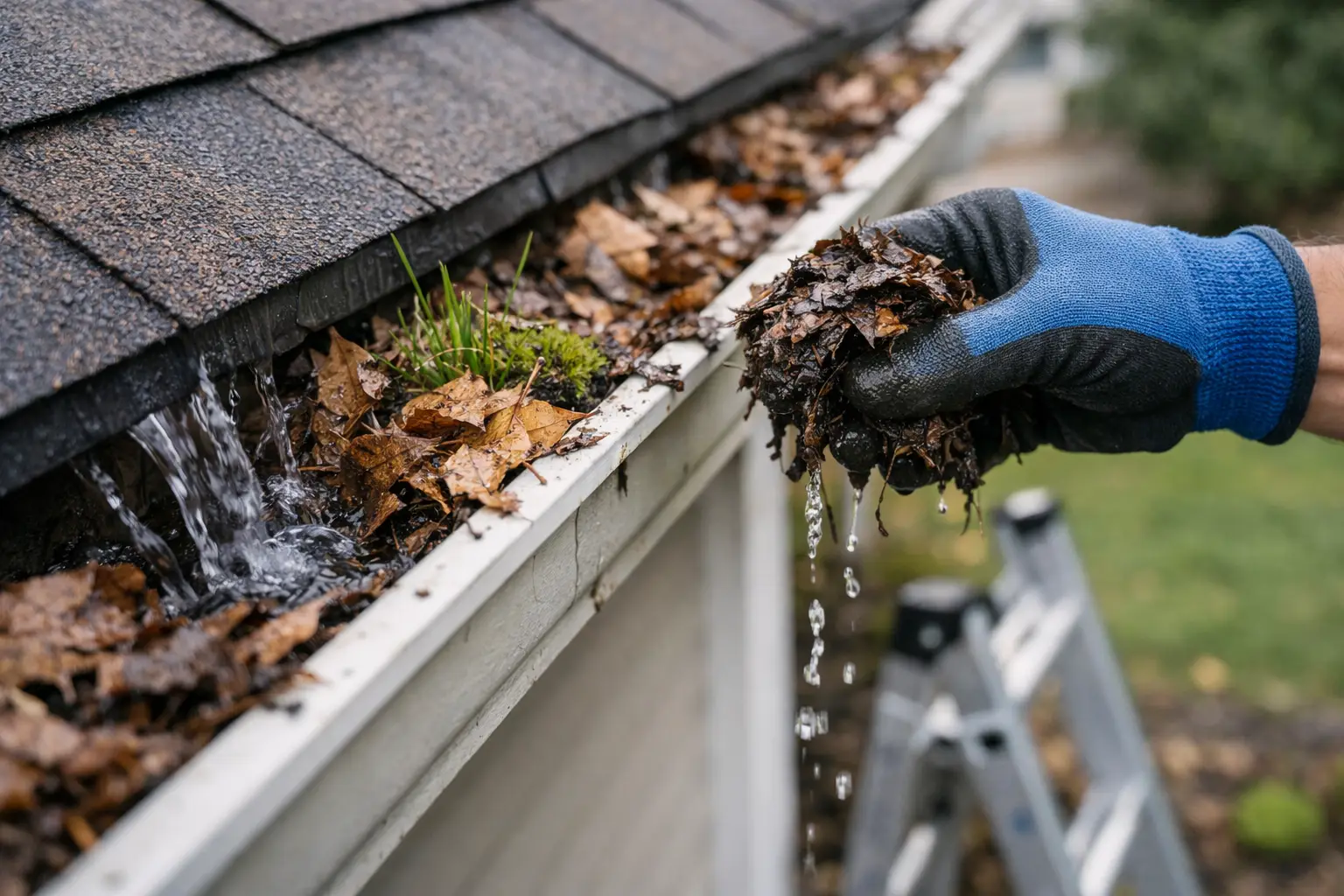
A heavy shower can reveal a gutter problem in minutes. If rainwater is spilling over the edge instead of travelling neatly towards the downpipe, it is time to look more closely. Knowing the signs gutters need clearing helps homeowners, landlords and property managers deal with a small maintenance job before it becomes a damp wall, damaged roofline or slippery path.
Gutters are easy to overlook because most of the problem sits above eye level. Leaves, moss, roof grit and wind-blown debris gradually build up, especially after autumn and during wet spells. A clear system protects the building by moving rainwater away from brickwork, windows, foundations and entrances.
1. Water is overflowing from the gutter
Overflowing water is the clearest warning sign. During rain, look for water pouring over the front or back of the guttering rather than running into the downpipe. This often means a blockage is holding water in one section, although it can also point to a poorly aligned gutter.
The risk is not limited to the gutter itself. Repeated overflow can soak external walls, leave dirty splash marks on brickwork and saturate the ground beside the property. Around doorways, patios and shopfronts, it can create puddles and slippery surfaces that are best avoided.
2. Plants, moss or grass are growing from the roofline
A few leaves resting in a gutter after a windy day are normal. A visible clump of moss, grass or weeds is different. It shows that debris has been sitting long enough to break down into a damp growing medium.
Moss is particularly common on older roofs and shaded properties. As it loosens, rain carries it into gutters where it can form dense plugs around outlets. Clearing it early is much easier than waiting for compacted debris to block the system completely.
3. Downpipes are slow, blocked or leaking
When the gutter looks full after rain but the downpipe is barely running, there may be a blockage at the outlet or further down the pipe. You may also notice water leaking from joints, spraying from a connection or backing up over the gutter edge.
Sometimes the blockage is caused by leaves. In other cases, it is roof moss, silt or even a small nest. The sensible approach is to clear and test the whole route, not simply remove the debris visible from the ground. Water needs a clear path from the gutter to the drain.
4. There are damp patches or green staining on walls
Damp patches beneath guttering should never be ignored. While damp can have several causes, an overflowing or leaking gutter is a common one. Look for dark areas on brickwork, peeling paint, algae staining or patches that become more obvious after wet weather.
Water repeatedly running down a wall can affect masonry, render and timber features over time. It can also leave windows, fascias and soffits looking tired well before they should. Prompt gutter maintenance is a practical way to keep rainwater where it belongs.
5. The guttering is sagging or pulling away
A sagging run of guttering is often carrying more weight than it should. Wet leaves, compacted moss and standing water are surprisingly heavy, particularly after prolonged rainfall. The additional strain can loosen brackets, pull joints apart and change the fall of the gutter.
This is one of the signs gutters need clearing that deserves quick attention. Once the gutter begins to dip, water collects in the low point rather than flowing to the outlet. Clearing the debris may help, but damaged brackets or sections may also need repair to restore proper drainage.
6. You can see debris from ground level
You do not need to climb a ladder to spot every issue. From a safe position, visible leaf build-up, moss spilling over the edge or standing debris near a downpipe are all good reasons to arrange a proper clear.
Be particularly alert if your property is close to mature trees. Homes, rental properties and commercial premises beneath deciduous trees can need more regular attention in autumn, while moss-heavy roofs may require checks at other times of year too. The right schedule depends on the setting, not just the calendar.
7. Water is collecting around the base of the building
Puddles beside the walls after rain may be caused by an overflowing gutter or a downpipe that is discharging poorly. If water is landing close to the building instead of being directed into suitable drainage, it can soak the surrounding ground and cause unsightly staining.
For landlords and business owners, this also affects presentation and safety. Wet entrances, paths and loading areas do not give visitors or tenants a good first impression. Keeping gutters and downpipes clear supports a cleaner, safer exterior across the property.
8. Fascias and soffits are stained or deteriorating
Fascias and soffits are designed to protect the roof edge, but they are not meant to cope with constant overflow. Dirty streaks, flaking paint, mould marks or soft-looking timber around the roofline can all suggest water is escaping where it should not.
A roofline clean can improve the appearance, but it should be paired with clearing the cause. Otherwise, the same stains can return after the next spell of heavy rain. Treating the drainage problem first protects the results of any exterior cleaning work.
9. You hear dripping long after the rain has stopped
Dripping from gutter joints after a shower is not always a serious issue, but persistent dripping can indicate standing water. A partial blockage, poor fall or loose connection may be preventing the gutter from emptying fully.
Listen around bay windows, porches, conservatories and extensions, where water noise is often easiest to notice. These areas can also be vulnerable to splashback and staining because the guttering is close to glass, frames and roof surfaces.
10. It has been more than a year since the gutters were checked
A gutter can be blocked before it looks obviously neglected from the ground. That is why regular inspection is useful, even if there has been no dramatic overflow. For many properties, a clear at least once a year is a sensible baseline. Properties near trees, with heavy roof moss or with complex rooflines may benefit from more frequent checks.
Commercial sites and managed properties often need a planned approach, particularly where public access, flat-roof drainage or multiple elevations are involved. Regular maintenance is usually more straightforward and less disruptive than arranging an urgent visit after water damage has appeared.
Why professional gutter clearing is often the safer choice
Clearing gutters can look like a simple ladder job, but working at height brings real risks. Wet paving, uneven ground, awkward access and overreaching all make household ladders less suitable than they appear. There is also the danger of damaging gutters, tiles or roofline fittings by leaning equipment in the wrong place.
A professional clear provides a safer, more thorough alternative. The job should include removing accumulated debris, checking outlets and downpipes, and confirming that water can flow freely. Photographs of the work can also be useful for landlords, managing agents and customers who want reassurance about the condition of roofline areas they cannot easily see.
Fluro Clean provides insured gutter clearing for homes and business premises across Tamworth, Staffordshire and surrounding Midlands locations, with clear communication and practical advice on the condition found. Sending a few photographs of the property is often enough to start a straightforward, no-obligation quotation.
Do not wait for the next downpour
The best time to clear gutters is before overflowing water forces the issue. If you have noticed staining, moss, sagging sections or water running down the walls, arrange an inspection while the problem is still manageable. A clean, free-flowing gutter system is one of the quietest ways to protect the appearance and condition of the property you work hard to maintain.


